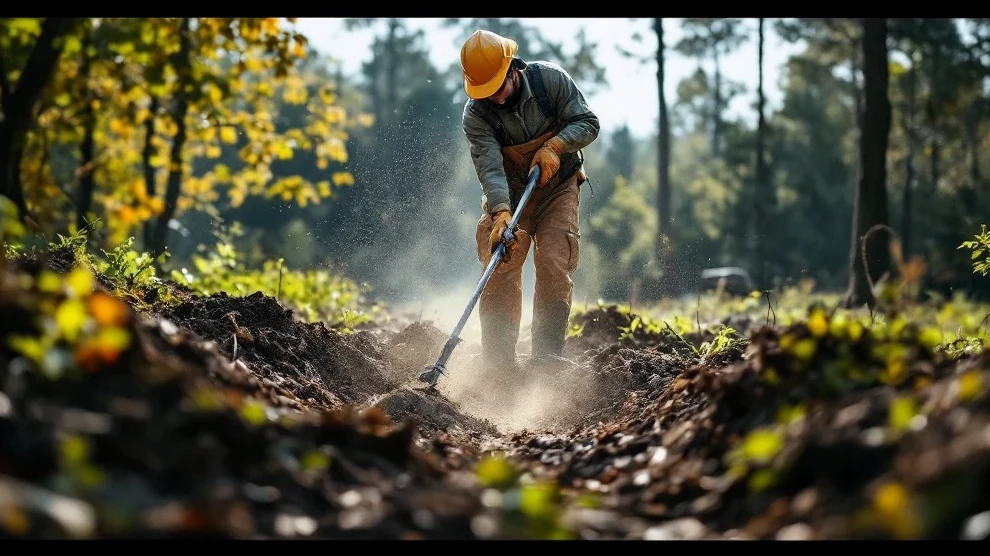
What is Forest Mulching & Brush Clearing and how does it work?
Forest mulching and brush clearing is a land management method that uses heavy machinery to grind trees, brush, and vegetation into nutrient-rich mulch. Unlike traditional clearing that leaves piles of debris, this process leaves behind a layer of mulch that improves soil health and prevents erosion.
In Mobile, where overgrown lots and dense underbrush are common, forest mulching offers a cleaner alternative to bulldozing or burning. A specialized mulching machine with a rotary drum chews through vegetation, turning everything from small saplings to thick brush into fine wood chips.
The mulch left behind acts as a natural weed barrier and helps retain moisture in the soil. This is especially useful in Mobile's hot summers when exposed dirt can bake hard as concrete. The process works on everything from overgrown residential lots to large acreage with heavy timber.
Unlike traditional land clearing that requires hauling away debris, mulching leaves the organic material on site. This saves on disposal costs and keeps nutrients in your soil. The mulch layer also helps prevent invasive plants from taking over cleared areas, a common problem in Mobile's humid climate.
Forest mulching machines can handle terrain that would challenge traditional equipment. They work on slopes, wet areas, and tight spaces where bulldozers might struggle. This makes them ideal for Mobile properties with uneven ground or limited access.
How Forest Mulching & Brush Clearing works, step by step
The process begins with an assessment of your property to identify obstacles and determine the best approach. A mulching machine then systematically clears vegetation, grinding everything into mulch that's evenly distributed across the cleared area.
First, we walk the property to spot any hidden hazards like old fence lines, stumps, or drainage issues. In Mobile, we often find buried debris from past hurricanes or hidden wet areas that need special attention. This survey helps plan the most efficient path for the mulcher.
The mulching machine moves through the area in passes, much like mowing a lawn but on a larger scale. Its heavy-duty drum spins at high speed, shredding vegetation down to ground level. Operators can adjust the machine to leave certain trees or features untouched while clearing around them.
As the machine works, it blows the mulch backward in an even layer. This distribution happens automatically, though operators may make additional passes to spread it more uniformly in high-traffic areas. The result is a clean, natural-looking surface about 2-4 inches deep.
For properties with particularly dense growth, we might make two passes - one to knock down the bulk of vegetation and a second to grind it finer. In Mobile's pine forests, this helps break down the tougher needles and cones into usable mulch.
After clearing, the site needs no additional cleanup. There are no piles to burn or haul away, no ruts from multiple machines. What's left is ready for immediate use as a natural area, or as a blank slate for landscaping projects.
Why Forest Mulching & Brush Clearing matters for your home
Proper brush clearing protects your property from fire hazards, pests, and invasive plants while improving usability and curb appeal. The mulch left behind enhances soil quality naturally, reducing the need for fertilizers or weed control.
Overgrown brush isn't just an eyesore - it's a fire risk, especially in Mobile's dry fall seasons. Mulching creates a defensible space around your home while avoiding the bare-earth look of traditional clearing. The mulch layer actually helps slow potential fires by retaining moisture.
Thick underbrush harbors mosquitoes, rodents, and snakes. Clearing it out reduces these pests and makes your yard more enjoyable. The mulch left behind also discourages new weed growth better than bare dirt, meaning less maintenance for you over time.
For homeowners looking to sell, a properly cleared lot shows better than an overgrown one. The neat, mulched appearance suggests the land is cared for and ready to use. It lets potential buyers envision their plans instead of seeing a daunting cleanup project.
The environmental benefits matter too. Unlike burning or hauling debris offsite, mulching keeps organic matter where it belongs. As the mulch breaks down, it feeds the soil naturally. This is especially valuable in Mobile's sandy soils that struggle to retain nutrients.
For larger properties, mulching can create walking trails or firebreaks without the expense of full clearing. You maintain some natural cover while gaining usable space. It's a balanced approach that many Mobile landowners prefer to complete deforestation.
Common problems and what causes them
Uneven mulch distribution, hidden stumps, and regrowth are the most frequent issues homeowners encounter after forest mulching. These usually stem from inadequate preparation or expecting too much from a single pass.
Pockets of thick mulch happen when the machine can't distribute material evenly in one pass. This often occurs around tree bases or in corners where the mulcher had to maneuver carefully. A follow-up spreading pass usually solves it, but some homeowners don't realize they can request this.
Hidden stumps or rocks can damage mulching equipment if not identified beforehand. In Mobile, we often find old oak stumps buried under years of growth. A thorough property walk before work begins helps spot these, but some only become apparent once surrounding brush is cleared.
Rapid regrowth frustrates some homeowners, especially in Mobile's long growing season. While mulch suppresses weeds, it won't stop all growth forever. Areas near tree lines or water sources may need occasional touch-ups as seeds blow in or roots resprout.
Soil compaction concerns some clients, but modern mulchers distribute their weight better than old bulldozers. The tracks spread out the machine's weight, minimizing ground disturbance. Any minor compaction is usually offset by the mulch layer's improvement to soil structure.
Miscommunication about what will be left standing causes some dissatisfaction. Be specific about trees or features you want preserved. Mark them clearly before work begins, because once vegetation is gone, it's gone for good.
- Uneven mulch piles from tight maneuvering
- Hidden stumps damaging equipment
- Faster regrowth near tree lines
- Unmarked trees accidentally removed
- Expecting bare dirt instead of mulch cover
Common questions about Forest Mulching & Brush Clearing
Frequently Asked Questions
How long does the mulch last before it decomposes?
In Mobile's humid climate, mulch breaks down faster than in drier areas - typically 12-18 months. The top layer may look fresh longer, but the material touching soil decomposes quicker, feeding the earth naturally.
Can I plant grass or gardens right after mulching?
Yes, but you'll need to rake aside the mulch layer where you want to plant. The mulch makes great top dressing once plants are established. For lawns, we recommend tilling it lightly into the topsoil first.
Will mulching kill all the roots and prevent regrowth?
No. While it destroys surface growth, some hardy plants like bamboo or smilax may resprout from deep roots. The mulch suppresses most regrowth, but you might see some shoots, especially near existing trees.
Is forest mulching safe near my home's foundation?
Yes, when done carefully. Operators keep machinery a safe distance from structures. The mulch itself benefits foundations by preventing soil erosion and reducing moisture fluctuations that cause shifting.
How steep of a slope can you mulch?
Most mulching machines handle slopes up to 30 degrees safely. Beyond that, we might recommend selective hand clearing or terracing first. Mobile's riverbanks and ravines often need this approach.
What happens to poison ivy or other toxic plants?
The mulching process destroys the plants, but urushiol oil (from poison ivy) can remain active in the mulch. If you're highly sensitive, wait a few rains before working in freshly mulched areas where it was present.
Can you mulch in wet conditions?
Mulchers work in damp areas better than traditional equipment, but standing water causes problems. Mobile's frequent summer rains might delay work briefly, but the machines can handle typical soggy ground.
Will mulching disturb my septic drain field?
We avoid driving directly over drain fields, but mulching around them is fine. The mulch actually helps protect drain fields from erosion and sun damage to beneficial bacteria in the soil.
How does mulching compare cost-wise to bulldozing?
Prices vary by job size and complexity, but mulching often costs less overall when you factor in not having to haul away debris or repair ruts left by traditional equipment. The soil benefits add long-term value too.
Can I request certain trees be left standing?
Absolutely. Mark any trees you want preserved with bright tape before work begins. Good operators can clear right up to the base of selected trees without harming them.
Need land clearing in Mobile? Get a free estimate today.
📞 256-578-4385